Week of 2026-03-16 to 2026-03-22

Video Diffusion Models Are Secretly Reasoning Engines with 3D Understanding

Video Diffusion Models Are Secretly Reasoning Engines with 3D Understanding

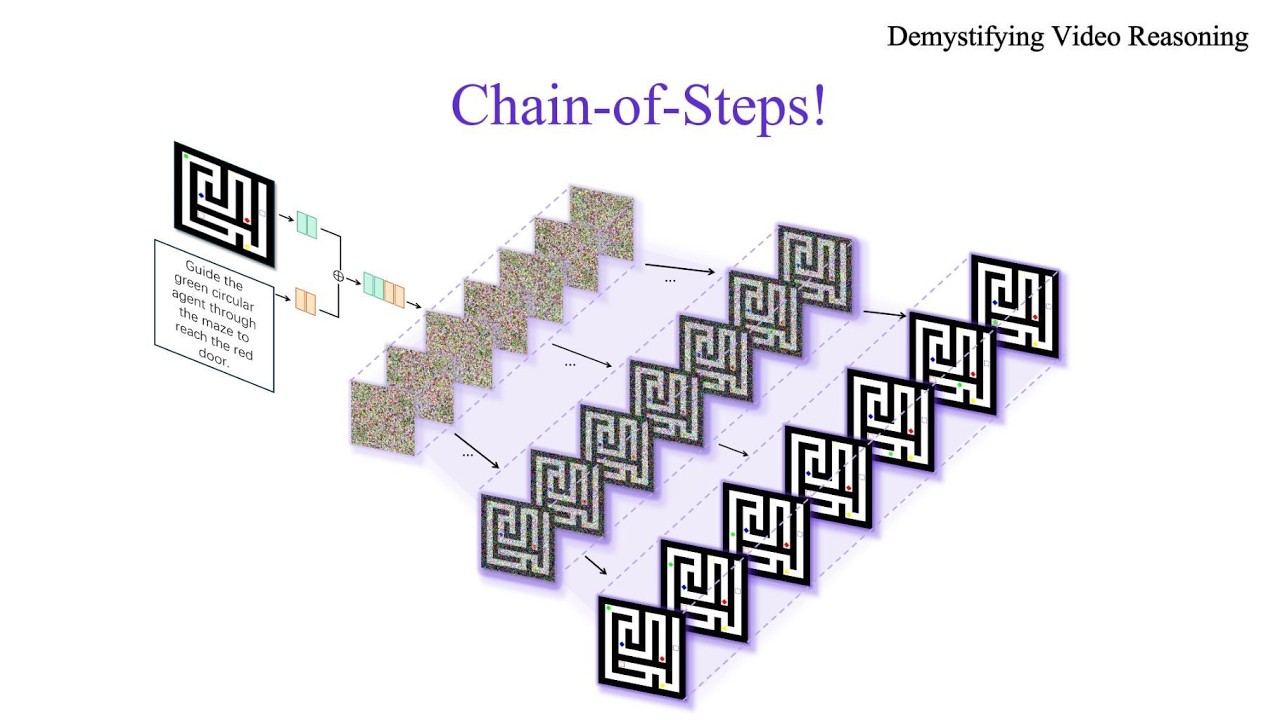
Two major papers reveal that video diffusion models encode far more than visual generation. "Demystifying Video Reasoning" (347 HF upvotes) shows reasoning emerges through denoising steps — not frame sequences — via a Chain-of-Steps mechanism with working memory, self-correction, and perception-before-action. Separately, VEGA-3D demonstrates that video generation models implicitly learn robust 3D structural priors and physical laws, which can be extracted as a plug-and-play "Latent World Simulator" to give MLLMs spatial understanding without explicit 3D supervision.

Analyst Note

These findings reframe video diffusion as more than a generative tool — it's a substrate for spatial intelligence and reasoning. For rendering teams, this means video generation backbones could become general-purpose scene understanding modules. The VEGA-3D approach of repurposing generative priors for perception is particularly elegant and could lower the barrier to integrating 3D awareness into production pipelines that already use video models.

World Models Break Out of the Lab: Real Cities, Stereo VR, and 4D Robotics

World Models Break Out of the Lab: Real Cities, Stereo VR, and 4D Robotics

This week saw a convergence of world model papers moving from toy environments to real-world grounding. Seoul World Model generates navigable video grounded in actual street-view imagery over hundreds of meters. MosaicMem introduces hybrid 3D/implicit spatial memory enabling minute-level consistent navigation in video world models. WorldCam uses camera pose as a unifying geometric representation for interactive 3D gaming worlds. StereoWorld produces end-to-end stereo video for VR without depth estimation. Kinema4D builds a 4D generative robotic simulator with URDF-based robot control and environment reaction synthesis.

Analyst Note

World models are fragmenting into specialized niches — navigation, gaming, robotics, VR — but sharing architectural DNA (video diffusion + spatial conditioning). For Riverside's rendering pipeline, the stereo/VR angle (StereoWorld) and the real-city grounding approach (Seoul World Model with retrieval-augmented street-view conditioning) are directly relevant. The hybrid memory approach in MosaicMem — lifting patches into 3D for localization while letting the model hallucinate dynamics — is an elegant compromise between explicit and implicit spatial representations.

3D Reconstruction and Generation: Physics-Grounded, Continuous LoD, and Semantic Tokenization

Several advances push 3D pipelines toward production readiness. HSImul3R (149 HF upvotes) introduces physics-in-the-loop 3D reconstruction of human-scene interactions — using the physics simulator as an active supervisor to jointly refine dynamics and geometry, producing outputs directly deployable to humanoid robots. Matryoshka Gaussian Splatting enables continuous level-of-detail from a single 3DGS model via stochastic budget training — any prefix of the ordered Gaussian set produces a coherent reconstruction. M³ augments multi-view foundation models with dense matching for monocular Gaussian Splatting SLAM, cutting ATE by 64% over VGGT-SLAM. LoST proposes semantic-salience tokenization for 3D shapes, achieving SOTA reconstruction using 0.1-10% of the tokens of prior autoregressive methods.

Analyst Note

The HSImul3R physics-in-the-loop approach is a paradigm worth watching: treating the simulator as a differentiable supervisor rather than just a downstream consumer. Matryoshka GS is immediately practical — continuous LoD from a single model is exactly what streaming/adaptive rendering needs. The LoST semantic tokenization for 3D could become foundational for AR-based 3D generation as the field converges on token-based architectures. For someone moving into a rendering team, the M³ monocular SLAM paper represents the cutting edge of real-time 3D reconstruction without calibrated stereo.

Also Notable

NVIDIA DLSS 5 Sparks "AI Slop" Controversy

DLSS 5 appears to generate AI imagery on top of upscaling rather than just enhance existing frames — characters look like different people, drawing sharp criticism from gamers and CG professionals.

Radiant: 80+ Production-Ready WebGL/Canvas Shaders, MIT Licensed

Open-source library of ultra-realistic shader effects for the web — multiple themes, zero dependencies, copy-paste integration.

Off-Axis Projection with World Labs Splats + Three.js + Face Tracking

Demo combining Blender → World Labs detailed splat generation → Three.js rendering with MediaPipe face tracking for parallax window effect.

AI-Driven Facial Animation via Depth Map Projection

Technique generating AI video facial animations (LTX 2), extracting depth maps, and projecting onto face meshes via vertex displacement — L.A. Noire-like results for indie games.

Neural Network World Emulation — Forest Trail Demo

Ollin Boer Bohan trained a neural network to mimic a real forest trail near his apartment, with an interactive web demo for real-time exploration.

Attention Residuals: Kimi Team Rethinks Depth Scaling

Replaces fixed residual accumulation with softmax attention over preceding layer outputs — 2.11% downstream gain at negligible overhead. Addresses hidden-state growth diluting layer contributions.

Mixture-of-Depths Attention (MoDA)

Each attention head attends to both sequence KV pairs at current layer AND depth KV pairs from preceding layers — 2.11% downstream improvement with 97.3% FlashAttention-2 efficiency.

SAMA: Factorized Video Editing Without External Priors

Decouples video editing into semantic anchoring and motion alignment — pre-training on motion-centric tasks alone yields strong zero-shot editing. Competitive with Kling-Omni.

3DreamBooth: 3D-Aware Subject-Driven Video Generation

Decouples spatial geometry from temporal motion via 1-frame optimization, enabling genuine 3D-aware video customization for VR/AR and virtual production without multi-view video datasets.

Spatial-TTT: Streaming Spatial Intelligence via Test-Time Training

Maintains and updates spatial evidence from unbounded video streams using test-time training with fast weights — hybrid architecture with sliding-window attention and 3D spatiotemporal convolution.

Nemotron-Cascade 2: Gold-Medal Reasoning at 3B Active Parameters

NVIDIA's 30B MoE with only 3B activated params matches frontier models on IMO/IOI/ICPC — 20× fewer parameters than DeepSeek equivalent. Open weights released.

OmniForcing: Real-Time Joint Audio-Visual Generation at 25 FPS

First framework to distill bidirectional audio-visual diffusion into a streaming autoregressive generator — solves extreme token sparsity and cross-modal sync issues for real-time generation.

LoGeR: Long-Context Geometric Reconstruction with Hybrid Memory

Handles geometric reconstruction from long video sequences using hybrid memory architecture.

Browser Use CLI 2.0: 2× Faster Browser Automation via Direct CDP

Major update to browser automation tool — direct Chrome DevTools Protocol, half the cost, connect to running Chrome instances.

MoTok: Diffusion-Based Motion Tokenizer Bridges Semantic and Kinematic Control

Three-stage motion generation framework using a novel diffusion-based discrete tokenizer — reduces trajectory error from 0.72cm to 0.08cm while using 1/6 the tokens.

IndexCache: 2× Faster Sparse Attention via Cross-Layer Index Reuse

Exploits the insight that sparse attention indices are highly redundant across adjacent layers — shares indices via 'Full' and 'Shared' layers with multi-layer distillation, significantly accelerating prefill and decode.

SK-Adapter: Skeleton-Based Control for Native 3D Generation

Lightweight adapter injects 3D skeleton joint coordinates and topology into frozen 3D generation backbones via cross-attention — enables precise structural articulation control and local 3D editing.

OneWorld: 3D Scene Generation in Native 3D Space

Performs diffusion directly within coherent 3D representation space instead of 2D image/video latents — uses 3D-URAE autoencoder with cross-view correspondence loss for consistent scene generation.

V-JEPA 2.1: Dense Self-Supervised Visual Representations

Meta's V-JEPA 2.1 achieves SOTA on egocentric anticipation, robotic grasping (+20pt over V-JEPA-2), depth estimation, and navigation — dense predictive loss with deep self-supervision across encoder layers.

Week of 2026-03-09 to 2026-03-15

Streaming Spatial Intelligence: Three Papers Converge on Video-to-3D

Three independent papers this week tackle the same core problem: building persistent spatial understanding from continuous video streams. Spatial-TTT (70 upvotes) uses test-time training with fast weights as compressed spatial memory over unbounded video. Holi-Spatial (53 upvotes) builds a scalable 3DGS-based pipeline to curate spatial QA data from raw web video. LoGeR (31 upvotes) achieves dense 3D reconstruction from minutes-long video in a single feedforward pass — no post-optimization.

Analyst Note

The convergence here is striking: all three papers independently identify that the bottleneck for spatial AI is not model capacity but how spatial information is retained over time. Spatial-TTT's use of fast weights to compress spatial evidence into network parameters is the most architecturally novel — it bypasses context windows entirely. LoGeR's elimination of post-optimization (bundle adjustment, global alignment) is the practical breakthrough: it makes phone-scan-to-3D-model workflows viable in real-time. For CG/CV pipelines, this means 3D capture tooling will soon be constrained by sensor quality, not compute. Combined with Holi-Spatial's data flywheel from web video, training data for spatial reasoning scales automatically.

Video Generation Gets Cinematic: Camera Control, Identity Lock, Infinite Length

Four papers push video generation from single-clip demos toward production-grade film tools. ShotVerse (28 upvotes) learns cinematic multi-shot camera control from naturally aligned (caption, trajectory, video) triplets. WildActor (26 upvotes) introduces a massive 18M-clip dataset for full-body identity consistency across viewpoints. DreamVideo-Omni (26 upvotes) solves multi-subject + multi-granularity motion control with identity reward learning. HiAR (21 upvotes) breaks the error-accumulation barrier for infinite-length AR video via hierarchical denoising.

Analyst Note

The shift is from 'generate a cool clip' to 'direct a sequence.' ShotVerse's data-centric approach — learning camera language from real film data rather than manual trajectory specification — is the right paradigm. WildActor addresses the ugly truth that prior identity-preserving methods were really face-preserving: body-level consistency across dynamic shots requires a fundamentally different dataset and architecture. For content production pipelines (toys, animation, marketing), multi-shot identity consistency with controllable camera is the unlock. HiAR's hierarchical denoising for infinite-length video solves the quality degradation problem that made AR video generation impractical beyond ~10 seconds. These pieces are assembling toward AI-directed video production.

Coding Agents Hit Production: Claude Code Review, Autoresearch, and Agent Orchestration

The coding agent stack crosses from demos to production infrastructure. Anthropic ships multi-agent code review in Claude Code — Boris Cherny reports 200% code output per engineer, with review being the bottleneck now addressed by agent teams. Karpathy releases his 'autoresearch' setup: a minimal 630-line LLM training loop where agents iterate on training code while humans steer research direction. Varun Mathur's Autoskill extends this to distributed skill factories. AgentCraft by Ido Salomon lets you orchestrate agents via an RTS-game interface.

Analyst Note

The signal here is that Anthropic dogfoods agent-driven code review internally — this isn't a product demo, it's their actual engineering workflow. When your AI company's own engineers use agents to review agent-written code, the loop is closed. Karpathy's autoresearch is the minimal viable version of this for ML research: human picks the hypothesis, agent grinds through training iterations. The practical implication for teams using Claude Code: adopt the review agent now, it's already battle-tested at scale. For research teams: the autoresearch pattern (630 lines of training code + agent iteration) is immediately replicable.

Also Notable

SuperSplat: Walk Mode + Streamed LOD for Gaussian Splats

SuperSplat ships first-person walk mode with WASD controls, streamed LOD, and easy upload — making Gaussian Splat scenes navigable and shareable like Google Street View.

DVD: Deterministic Video Depth from Diffusion Priors

First framework to deterministically convert pre-trained video diffusion models into single-pass depth regressors — eliminates stochastic sampling and scale drift.

CARE-Edit: Dynamic Expert Routing for Image Editing

Replaces static conditioning concatenation in ControlNet with a latent-attention router that dynamically selects expert pathways per diffusion timestep — reduces artifacts from conflicting modalities.

CoCo: Code-as-Chain-of-Thought for Structured Image Generation

Uses executable code as the reasoning step before image generation — produces structured drafts via code then renders, excelling at complex spatial layouts and embedded text.

ELIT: Variable-Length Latent Tokens Decouple DiT Compute from Resolution

Drop-in DiT mechanism that inserts a learnable variable-length latent interface, enabling runtime quality-speed tradeoffs without retraining.

SVG-EAR: Training-Free Sparse Attention Speedup for Video DiTs

Parameter-free linear compensation for dropped attention blocks in video generation via error-aware routing — ~2x speedup with minimal quality loss.

Planning in 8 Tokens: Ultra-Compact World Model Tokenizer

Compresses visual observations to just 8 discrete tokens for action-conditioned world models, making real-time planning computationally feasible.

IndexCache: Cross-Layer Attention Index Reuse for LLM Speedup

Exploits cross-layer redundancy in sparse attention indexers — reuses top-k token selections across layers, cutting prefill latency 2-3x with negligible quality loss.

FIRM: Robust Reward Models for Faithful Image Editing

Tackles reward model hallucinations in RL-guided image editing with curated data, base-and-bonus reward strategy, and new FIRM-Bench benchmark.

Claude Generative UI Reverse-Engineered

Michael Livs extracted Anthropic's generative UI design system from conversation exports, rebuilt it with live-streaming HTML via morphdom DOM diffing into native macOS windows.

NodeToCode: Unreal Engine Blueprints to C++

Open-source tool that translates UE Blueprint visual scripts to C++ — useful for game dev teams migrating visual prototypes to production code.

Nvidia Nemotron 3 Super

Nvidia's new open model punches significantly above its weight class — r/LocalLLaMA calls it a bigger deal than the marketing suggests, with 152 comments of analysis.

VeridisQuo: Open-Source Deepfake Detector

Combines spatial and frequency-domain analysis for deepfake detection with manipulation heatmaps — open-sourced university project on r/MachineLearning.

MLX Circle-Splatting Renderer for Dimensionality Reduction

Han Xiao built pure MLX implementations of UMAP/t-SNE/PaCMAP with a scatter-add alpha-blending splatting renderer on Metal — 70K points from raw data to rendered video in seconds.

PufferLib 3.0: Petabyte-Scale RL Training on One Server

Trained RL agents on 1 petabyte / 12,000 years of data on a single server — algorithmic breakthroughs, massively faster training, 10 new environments.

Week of 2026-03-10 to 2026-03-10

Karpathy's AutoResearch: RL Agents That Do Their Own ML Research

Andrej Karpathy released 'autoresearch' — a minimal framework where an RL agent iterates on neural architecture and hyperparameter research autonomously. A ~630-line nanochat LLM training core runs on a single GPU, and the agent proposes code modifications, observes validation loss, and updates via PPO. Separately, a formal paper (AutoResearch-RL) demonstrates the same concept with convergence guarantees.

Analyst Note

This is the 'AI does AI research' loop getting real and accessible. The fact that Karpathy stripped it to a single-file, single-GPU setup means anyone can experiment. The bigger implication: if a small RL agent can discover architecture improvements that humans missed, the compound effect over many iterations could be significant. Watch for this pattern to spread beyond LLM training into CV and graphics architectures.

Holi-Spatial: 3D Gaussian Splatting Meets Vision-Language Models at Scale

Top HF paper this week (53 upvotes). Holi-Spatial builds a scalable pipeline that evolves raw video streams into holistic 3D spatial intelligence by combining 3D Gaussian Splatting with vision-language models. Unlike prior work that reuses small hand-annotated datasets, this approach systematically annotates large-scale 3D scenes from web video data, producing spatial QA pairs with geometric accuracy and relational semantics.

Analyst Note

This bridges two hot areas — 3DGS and VLMs — in a way that could actually scale. The key insight is using 3DGS as the spatial backbone for generating training data rather than as a rendering endpoint. For Spin Master's work on onboarding/tiny stories, this kind of spatial understanding could be relevant for scene comprehension in interactive content. The data pipeline approach (auto-annotate 3D from video) is more interesting than the model itself.

Claude Code Gets Multi-Agent Code Review

Anthropic shipped Code Review for Claude Code — a team of agents runs deep reviews on every PR. Boris Cherny (Anthropic) says engineering output is up 200% this year and reviews were the bottleneck. The system uses separate context windows per agent, leveraging test-time compute across isolated contexts rather than one large window.

Analyst Note

The architecture detail matters: separate context windows per review agent, not one shared context. This matches what we've seen with Claude Code subagents — isolated contexts catch things a single pass misses. The 200% productivity claim is bold but tracks with what I've observed: the bottleneck has genuinely shifted from writing to reviewing. We should try this on the next CC spawn.

Also Notable

LoGeR: Long-Context 3D Reconstruction from Video Without Post-Optimization

Scales dense 3D reconstruction to extremely long video sequences using hybrid memory — bidirectional priors within chunks, sliding window attention across chunks. No post-optimization needed.

Planning in 8 Tokens: Ultra-Compact World Model Tokenizer

Encodes observations into just 8 discrete tokens for latent world models, making real-time planning computationally feasible. Conventional tokenizers use hundreds of tokens per frame.

Fine-Tuned Qwen3 SLMs (0.6-8B) Beat Frontier Models on Narrow Tasks

Systematic comparison shows distilled small Qwen3 models outperform GPT-5, Claude Opus, and Gemini Flash on specific classification and function-calling tasks. The small model advantage is real for focused use cases.

VeridisQuo: Open-Source Deepfake Detector (Spatial + Frequency Analysis)

Combines spatial and frequency-domain analysis to detect deepfakes and show exactly where the face was manipulated. Open-source, with visual heatmap output.

Microsoft Copilot Cowork: Multi-Step Office Agent Built on Claude

Microsoft launched Copilot Cowork — an agent that executes multi-step workflows across Outlook, Teams, Excel, and PowerPoint autonomously. Notably built on Anthropic's Claude, not OpenAI.

WildActor: Identity-Preserving Human Video Generation

Actor-18M dataset + asymmetric identity-preserving attention for consistent full-body identity across dynamic shots and viewpoints. Addresses the copy-paste artifact problem in human video gen.

AgentCraft: Control AI Agents Like an RTS Game

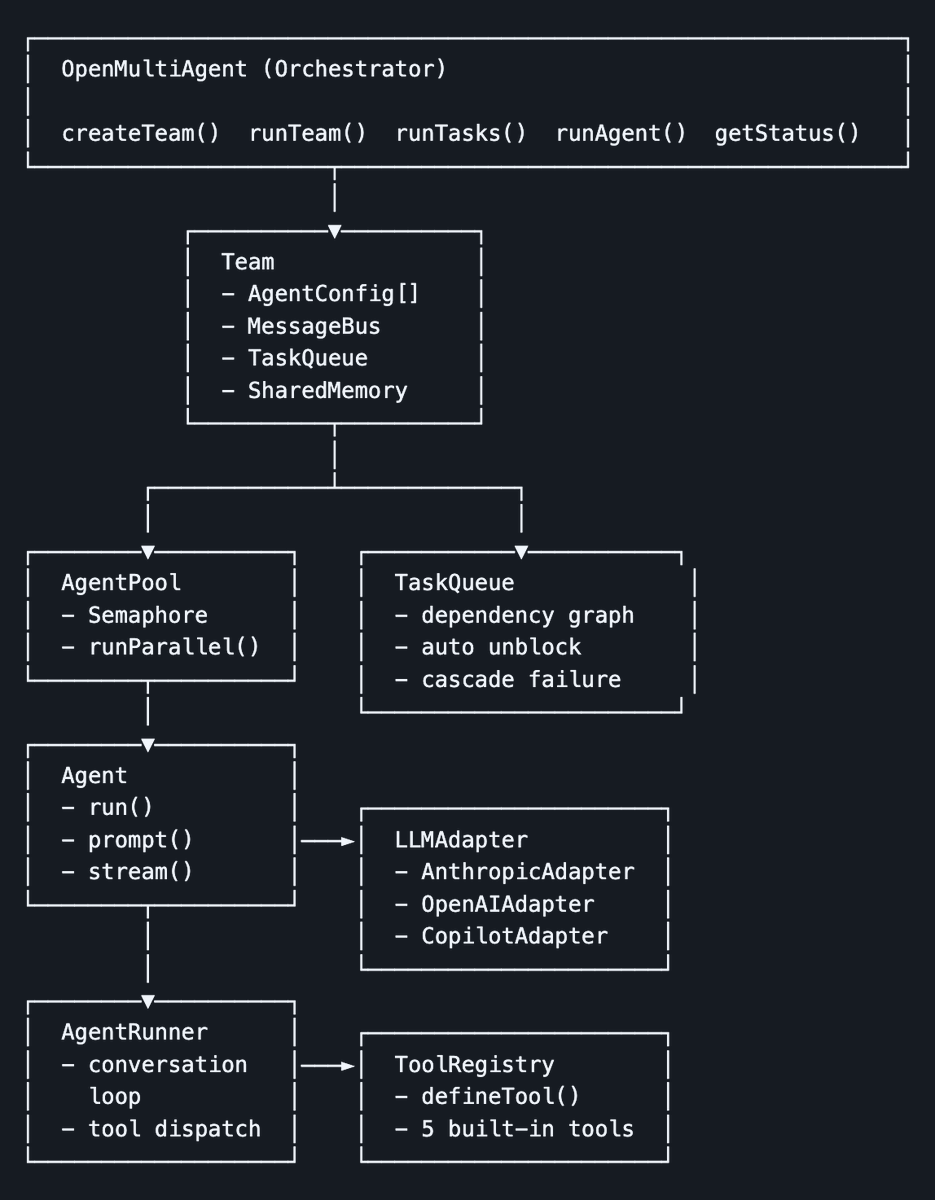
Ido Salomon released AgentCraft v1 — an RTS-style interface for controlling coding agents. Early but fun concept: `npx @idosal/agentcraft`.

LTX 2.3: Open Video Generation Getting Serious

Multiple impressive LTX 2.3 text-to-video generations on r/StableDiffusion showing significant quality jumps in open-source video models.

Depth Perception Blender Add-on via Head Tracking

CS student built a Blender add-on using real-time webcam head tracking to create natural depth perception while navigating 3D scenes. Free and open-source.

Unreal Blueprint to C++ Translator

Open-source tool that translates Unreal Engine Blueprints to C++ code. Useful for performance-critical game dev workflows.

Week of 2026-03-03 to 2026-03-09

Gaussian Splatting Breaks Into Real-Time Video

Two independent teams demonstrated real-time 4D Gaussian splatting for dynamic scenes, achieving 60fps rendering of complex video sequences. SplatFlow from ETH Zurich uses flow-guided deformation fields, while DynaSplat from Google DeepMind introduces temporal attention mechanisms. Both show dramatic quality improvements over prior dynamic NeRF approaches.

Analyst Note

This is the missing piece for production use of 3DGS in film/VFX. Static scene reconstruction was already competitive — now dynamic scenes are catching up. The Google approach is particularly interesting because it could integrate with their existing NeRF-to-mesh pipeline.

Claude 3.5 Opus Released with Native Tool Use

Anthropic released Claude 3.5 Opus with deeply integrated tool use — the model can now plan multi-step tool chains internally rather than requiring external orchestration. Early benchmarks show 40% fewer API round-trips for complex agent workflows. Coding benchmarks jump significantly, with SWE-bench scores reaching 62%.

Analyst Note

The real story isn't the benchmark numbers — it's the architecture shift. Moving tool planning inside the model eliminates the brittle prompt-engineering layer that made agent frameworks fragile. This is what OpenClaw and similar systems have been working around. Expect the orchestration layer to thin out significantly.

World Models Get Spatial Awareness

NVIDIA's GameGen-2 introduces a world model that understands 3D spatial relationships, enabling consistent physics when generating interactive environments. Unlike prior work that treated video generation as 2D sequence prediction, GameGen-2 maintains an implicit 3D representation that prevents the "impossible geometry" artifacts common in generated worlds.

Analyst Note

This bridges the gap between world models and actual game engines. The implicit 3D representation is key — previous approaches could generate visually convincing frames but fell apart when you needed consistent spatial reasoning (walk around a corner and back, the scene should be the same). Still far from production game quality, but the direction is right.

Also Notable

Stable Diffusion 4 Preview Leaks Show Major Architecture Change

Early access users report SD4 moves to a DiT-based architecture with native video support. Quality appears to match DALL-E 3 in initial comparisons.

Codex CLI Gets Multi-File Context Window

OpenAI's Codex CLI now supports loading entire project directories into context, with smart chunking that preserves cross-file references.

NeRF-to-Mesh Pipeline Achieves Sub-Second Export

New paper from Meta demonstrates instant mesh extraction from trained NeRFs, making the NeRF→production pipeline viable for real-time applications.

GPT-5 Rumored for Q2 2026 with Native Multimodal Generation

Multiple sources suggest GPT-5 will unify text, image, video, and audio generation in a single model. No official confirmation from OpenAI.

Real-Time Neural Rendering Benchmark Published

New standardized benchmark for neural rendering methods covers speed, quality, and memory across 50 scenes. 3DGS variants dominate speed; NeRF variants win on quality.

Cursor Adds AI-Powered Git Conflict Resolution

Cursor 0.45 introduces automatic merge conflict resolution that understands both sides' intent. Early reports say it handles 80%+ of conflicts correctly.

Diffusion Models Learn to Count

Paper shows a training technique that gives diffusion models accurate object counting, solving one of the oldest failure modes in image generation.

Archive